What a Yearly Garage Door Tune-Up Covers (and What to Leave Alone)
Some checks take two minutes and are safe for any homeowner. Others involve parts under serious tension and belong to a pro.
October 15, 2026 · 4 min read
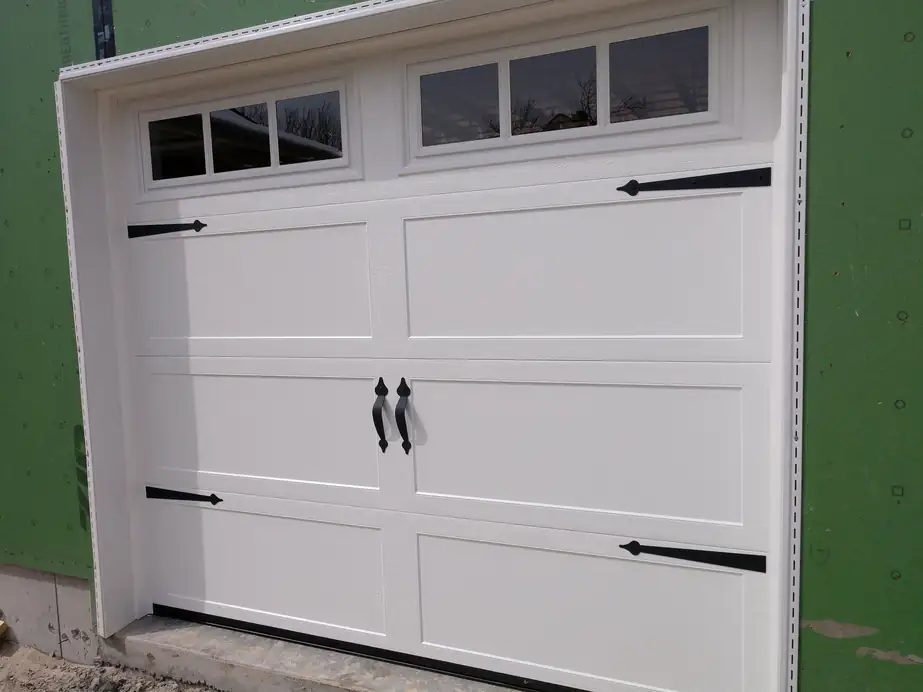
For most homes, the garage door is the largest and heaviest moving part in the whole house. It goes up and down a few times a day, every day, often without anyone thinking about it. Cars get an oil change and a seasonal check. A garage door gets ignored until something breaks.
A yearly tune-up changes that. It catches small things while they are still small: a dry roller, a worn seal, a sensor that has drifted out of line. It also gives the door a look from someone who knows what normal looks like. Here is what a good tune-up covers, and which parts of it you can safely start yourself.
Checks any homeowner can do
These take a few minutes and need no tools. Do them at the start of fall, before the cold arrives, or any time the door starts acting differently.
- Watch and listen. Run the door up and down a few times. Note any scraping, popping, grinding or shaking, and any hesitation at the same spot each time.
- Look at the rollers, hinges and track from the floor. You are looking for rust, bent metal, a roller that has slid out of its track or a hinge that has cracked.
- Check the weather stripping and the bottom seal. If the rubber is cracked, flattened or pulling away, daylight and drafts will find their way in.
- Test the photo-eye sensors. These are the small lenses near the floor on each side of the door. Close the door with the opener, and wave a broom handle or a cardboard box through the beam while it is coming down. It should stop and reverse right away.
- Test the auto-reverse. Lay a scrap board flat on the floor in the door's path and close the door. When it touches the board, it should reverse. If it does not, stop using the opener and call.
- Do the balance check, but only with the door fully closed. Pull the red release cord, lift the door by hand to about halfway, and let go. A balanced door stays put. If it drops or lifts with real effort, close it and call.
If you want to add some lubricant, use one made for garage doors on the hinges and the roller bearings. Skip the track itself, since grease there collects dirt and can make rollers slip. Wipe off any extra.
What to leave alone
The springs and cables are the two parts that cause the most injuries, and they are not a place for amateur work. A torsion spring stores a great deal of energy, and the brackets at the bottom corners of the door, where the cables attach, are under load whenever the door is down. Do not loosen those bolts, do not try to wind or adjust a spring, and do not pull on cables. If any of these look damaged, treat the whole door as unsafe until it has been looked at.
Adjusting the opener limits, the force settings and the travel distance also benefits from a trained eye. Set wrong, the door can slam, stop short or fail to seal at the floor.
What a professional tune-up covers
A proper tune-up goes well beyond what you can see from the driveway. It includes a safety inspection of the full system, adjusting and lubricating the moving parts, a check of the springs and cables, replacing worn rollers where needed, and a look at the hinges and track alignment. The weather stripping and bottom seal get checked and replaced if they are worn. The opener gets tested, along with the sensors, so any trouble is found before it strands you in the garage on a snowy morning.
At Classic Overhead Door of New England, tune-ups and maintenance are part of the regular work. The recommendation is to book one at least once a year. Roger works from a fully stocked truck, which means that if a roller, a seal or a cable turns out to be worn, there is a good chance he can fix it on the spot rather than coming back another day.
Why every year
Most garage door failures do not appear without warning. A squeak turns into a grind. A slightly lopsided door turns into a bent section. A loose roller turns into a door that jumps its track. Each of these is easier and cheaper to deal with in its early stage, and a yearly visit puts a trained set of eyes on the door before any of them get serious.
There is a quieter benefit too. A door that runs smoothly and quietly is a door you do not have to think about. If you have a bedroom above the garage, you will notice that benefit before anyone else in the house does.
Scheduling one
Fall is a good time, ahead of the first hard freeze, when metal parts and rubber seals are less forgiving. Whatever the season, a tune-up works best when you have a short list of what you noticed: the sound, the spot where the door hesitates, anything that looks different from last year. Share that list when you call.
To book a tune-up with Roger, text or call (508) 726-2545. Estimates are free and honest, and texting is the quickest way to reach him. The shop is open Monday through Friday, 7am to 6pm, and serves Charlton, Oxford, Worcester and the surrounding towns.
Classic Overhead Door of New England, (508) 726-2545
Call (508) 726-2545More articles
5 Signs Your Garage Door Spring Is About to Break
A garage door spring does its job quietly for years and then fails all at once, so the warnings are worth learning.
How to Choose the Right Garage Door Style for Your Home
On many houses the garage door is the largest thing you can see from the street, so the style deserves more than a quick glance at a catalog.