5 Signs Your Garage Door Spring Is About to Break
A garage door spring does its job quietly for years and then fails all at once, so the warnings are worth learning.
October 15, 2026 · 4 min read
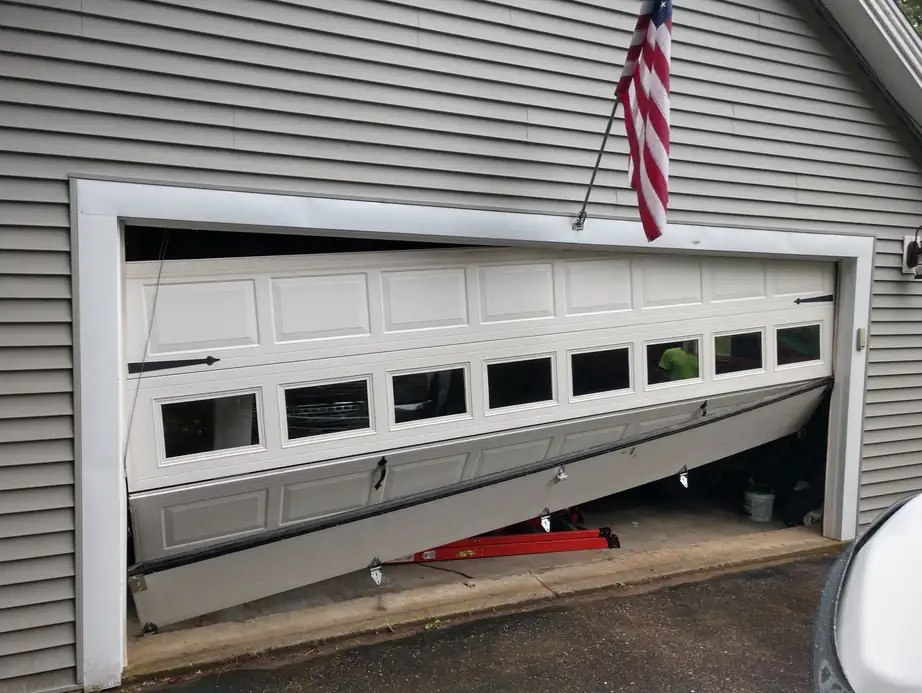
Every garage door has a spring system doing most of the lifting. Most homes have one or two torsion springs on a steel bar above the door, and some have extension springs running along the sides of the horizontal tracks. Either way, the springs are the muscle. The opener mostly guides the door and holds it where you tell it to stop.
That is why a failing spring is a bigger problem than a failing remote. A spring does not fade out politely. It wears for years, then lets go with a bang that you can hear from inside the house. The good news is that it usually gives a few hints first, and catching them can turn an emergency into a scheduled visit.
Why springs wear out
Each trip up and down winds and unwinds the spring, and the metal tires a little every time. A door that a busy family opens several times a day goes through that cycle far faster than a door that only sees a weekend car. Dry, dirty hardware adds friction and makes the spring work harder. A spring is a part that gets used up.
1. A gap in the coil
Stand back and look at the spring above the door. A torsion spring is a single tightly wound coil, and the turns should sit snug against each other. If you can see a clean gap, with the coil split into two pieces, the spring has already broken. A stretched or uneven spot is an earlier warning that the metal is giving up. Look with your eyes only. Do not reach for it, and do not try to pull the two halves back together.
2. The door feels heavy, or the opener strains
A door that is properly balanced feels surprisingly light. When the springs are weakening, the weight shifts to the opener. You may notice the motor sounding labored, the door rising slower than it used to, or the door stopping and reversing partway because the opener cannot carry the load. If the opener only manages a few inches before giving up, that is usually a spring that has already failed rather than an opener problem.
3. The door will not stay put, or comes down too fast
A balanced door stays where you leave it, about halfway up, without drifting. If it creeps down, or if it slams shut faster than it used to, the springs are no longer holding their share. A door that drops quickly can hurt a person, a pet or a bumper.
You can check this once, carefully. With the door fully closed, pull the red release cord so the opener lets go, then lift the door by hand to about waist height and let go. It should hold. If it falls, or if lifting it takes real effort, stop right there, close it, and call. And if you already suspect the spring is broken, skip the test entirely. Do not pull the release cord on a door that is raised with a broken spring, because nothing is holding the weight up anymore.
4. A loud bang, followed by a door that will not move
Many people find out about a broken spring this way. There is a sharp crack from the garage, and later you press the button, the motor hums, and the door barely moves or does not move at all. Check the spring for a gap, but do not try to open the door manually, and do not stand under it. Leave it closed and make the call.
5. Frayed cables, a crooked door or jerky travel
Springs and cables work as a pair. Cables run from the bottom corners of the door up to the spring system, and when a spring weakens, cables take uneven loads. Look for fraying strands, a cable that has slipped off its drum, or one side of the door hanging lower than the other. A door that moves in jerks, or a bottom edge that no longer sits level on the floor, deserves attention for the same reason. Cables under tension are not parts to handle yourself.
What to do and what to leave alone
Torsion springs hold a huge amount of stored energy, and the bottom brackets that hold the cables are under load too. Adjusting, winding or replacing them without the right tools and training is how people end up in the emergency room. This is one of the few home jobs where the honest answer is simply not to try it.
- Look at the springs and cables, and listen to the door. Do not touch them.
- Keep people and pets away from a door that looks or sounds wrong.
- Do not use the opener on a door that you suspect has a broken spring. Forcing it can damage the opener or bend the door.
- Write down what you saw and heard. It helps when you describe the problem to the person who comes out.
A broken spring is a repair that should not wait, but it does not have to turn into a long ordeal. Roger runs a fully stocked repair vehicle, so he brings the shop to you. Springs and cables are part of his regular repair work, and he gives free, honest estimates. If something above sounds familiar, text or call (508) 726-2545, and describe what you see. Texting is the quickest way to reach him, and the shop is open Monday through Friday, 7am to 6pm.
Classic Overhead Door of New England, (508) 726-2545
Call (508) 726-2545More articles
How to Choose the Right Garage Door Style for Your Home
On many houses the garage door is the largest thing you can see from the street, so the style deserves more than a quick glance at a catalog.
What a Yearly Garage Door Tune-Up Covers (and What to Leave Alone)
Some checks take two minutes and are safe for any homeowner. Others involve parts under serious tension and belong to a pro.