Insulated vs. Non-Insulated Garage Doors for a New England Winter
An attached garage shares walls and floors with your living space, so the door you pick affects more than the garage itself.
October 15, 2026 · 4 min read
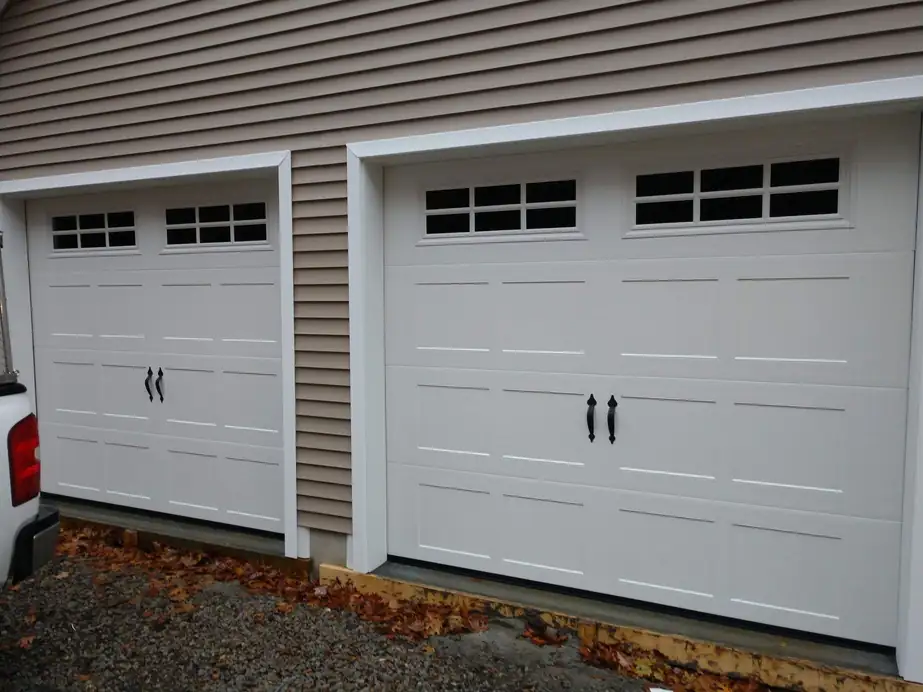
In central Massachusetts, the garage door is a big opening in the side of the house that stays closed most of the time. When January arrives, it is also a big, thin wall facing the weather. How well that wall resists the cold depends on how the door is built.
That is the real difference between an insulated and a non-insulated door. It is not about looks, though both versions come in the same range of styles. It is about what happens to the temperature in the garage and in the rooms next to it.
What R-value actually tells you
R-value is a number that describes how well a material resists heat moving through it. Higher is better. A door with a higher R-value slows the flow of heat from the warm side to the cold side, so the garage stays closer to the temperature of the house in winter.
Classic Overhead Door of New England installs insulated doors with a polyurethane foam core, with R-values as high as 17. A non-insulated door is a single layer of steel, with nothing between the outside air and the inside air except the metal itself. Both are real options, and which is right for you depends on how you use the space.
When an insulated door earns its keep
- Your garage is attached to the house. The shared wall and any ceiling or floor between them lose less heat when the garage stays milder.
- There is a room above the garage. Bedrooms and offices over a cold garage tend to have cold floors, and the door is one of the biggest contributors.
- You use the garage as more than a place to park. A workshop, a gym or a hobby space is more pleasant when the temperature does not swing so much.
- You want a quieter door. The foam core stiffens the panels, so an insulated door usually feels more solid and rattles less than a thin single-layer steel one.
When a non-insulated door makes sense
A detached garage or a shed that never gets heated may not gain much from insulation. If the building is for storage, a mower and a few bins, you may be happier putting your money into a good bottom seal and quality hardware instead. A non-insulated door is also a sensible choice for a space where you want ventilation, or when the budget for the project is tight and the door is not part of the home's heated envelope.
The door is only part of it
An insulated panel will not do its job if air leaks around it. Cold air rushes in at the bottom edge when the rubber seal is old, and it sneaks past the sides and top when the weather stripping is cracked or flattened. These are cheap parts compared to the door itself, and replacing them is part of a normal tune-up and part of a normal installation. If you already have an insulated door and still feel a draft, start there.
Also check where the door meets the floor. A concrete floor that has heaved or settled can leave a gap that no seal can fully cover, and a bottom seal that is a little too short will let in snow and meltwater on windy days.
A heavier door needs a matched spring
Here is a point that surprises people. An insulated door weighs more than a non-insulated one, and the spring system has to be matched to the weight of the door. If you swap a thin door for an insulated one on the old springs, the door will feel heavy, the opener will strain and the door may not stay balanced. That is a good reason to have the whole system checked at the time of installation, and not just the panels.
This is not a job to try yourself. Springs and cables carry serious tension, and the match between the springs and the door is the part that keeps everything safe over the long run.
Rust, finish and warranty
Road salt and slush take a toll on the bottom of a garage door more than anywhere else. Most of the doors Classic Overhead Door installs come with a lifetime rust warranty, backed by the manufacturer. Ask for the warranty terms in writing for the specific door you choose, and ask what the warranty covers and for how long.
A simple way to decide
Ask three questions. Is the garage attached to the house or under a room you use? Do you spend time in the garage in winter? Do you want a quieter, sturdier door? If the answer to any of those is yes, insulation is likely worth it. If the answer to all three is no, a non-insulated door will probably do the job.
Classic Overhead Door has served Charlton and nearby towns since 1999, and most installations are finished in a single day, from tear-out to cleanup. He sells insulated and non-insulated doors, including carriage house styles and steel doors that look like wood. For a free, honest estimate that fits your garage and your budget, text or call (508) 726-2545.
Classic Overhead Door of New England, (508) 726-2545
Call (508) 726-2545More articles
5 Signs Your Garage Door Spring Is About to Break
A garage door spring does its job quietly for years and then fails all at once, so the warnings are worth learning.
How to Choose the Right Garage Door Style for Your Home
On many houses the garage door is the largest thing you can see from the street, so the style deserves more than a quick glance at a catalog.